Why your feed is full of book stacks
Maybe you’ve seen it.
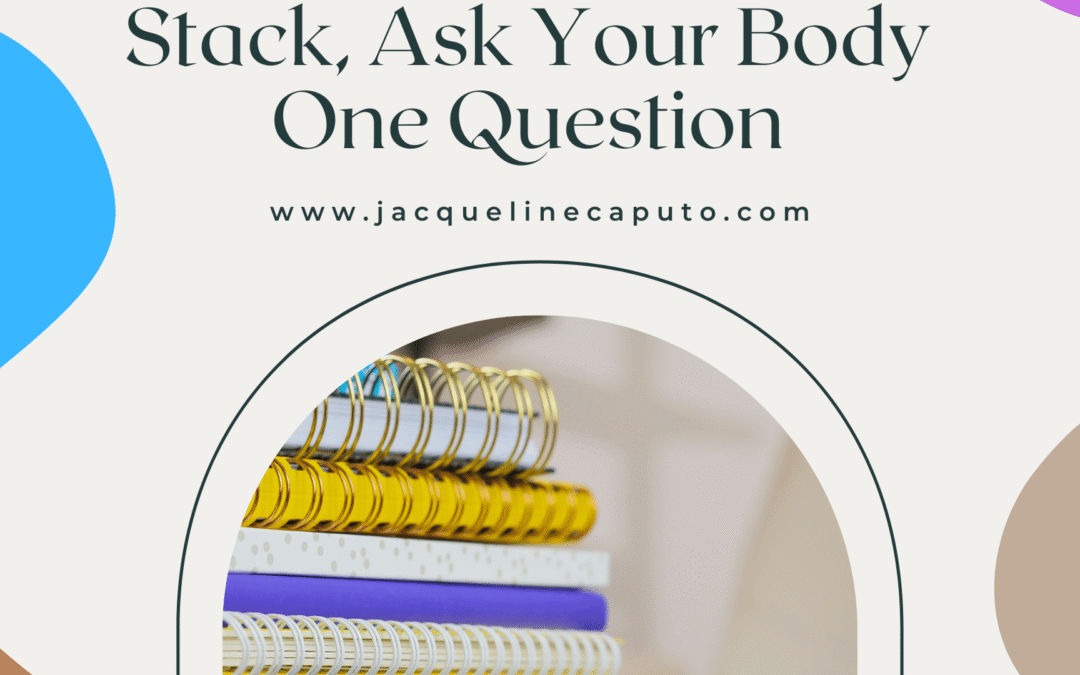
Someone sets a little pile next to the couch. A journal. A crossword book. A paperback with a cracked spine. A sudoku book with a pencil tucked inside.
They call it brain stacking.
The idea is simple. When you feel the pull to pick up your phone, you reach for something on paper instead. Something slow. Something that asks a little of your mind and gives you something back.
Gen Z turned it into a trend this fall, riding the wave of last year’s analog revival. I love it.
I also want to add the piece most of the videos skip. Your body.
Your hand finds the phone before you decide anything
Notice the moment right before you scroll.
Your jaw is a little tight. Your breath sits high in your chest. Maybe you just got off a hard call. Maybe the house finally went quiet and the quiet felt like too much.
Your nervous system reads that state and goes looking for relief. The phone offers relief fast. Novelty, color, a tiny reward every few seconds. For a dysregulated body, that’s an efficient deal.
So when you swap the phone for a crossword and it doesn’t stick, please be gentle with yourself.
Your body did its job. It picked the quickest route back to manageable. A crossword needs a calmer system than the one you had in that moment.
For some of us, especially with ADHD wiring or a trauma history, the scroll looks more like shutdown. An hour disappears. You feel heavy, numb, a little ashamed.
That’s the freeze response. It deserves your compassion.
Regulators are catching up to what your body already knew
Last week the European Commission issued preliminary findings that TikTok’s For You feed breaches the EU’s Digital Services Act. Their concern is the rabbit hole.
The algorithm keeps serving more of whatever you lingered on. For some people, that means video after video about sadness, isolation, or body image. The Commission named minors and vulnerable adults as the people most at risk.
Pause on a few videos for a few seconds each, and the feed can narrow around that topic in under half an hour.
Now picture a nervous system that’s already struggling. You linger on the sad video because it matches how you feel. The app learns. Soon your whole feed agrees with your worst day.
The findings are preliminary, and TikTok gets a chance to respond. Your body doesn’t need to wait for the ruling, though. It has been telling you for a while.

Regulate first, then reach for the stack
Keep your brain stack. Build it with love. Just add one step in front of it.
When you catch your hand reaching for the phone, stop and ask your body one question.
What do you need right now?
Then give it something small:
- Put both feet flat on the floor and press down. Feel the ground push back.
- Let your exhale run longer than your inhale. Repeat four or five times.
- Look around the room and let your eyes land on something soft or familiar.
- Rest a hand on your chest or your belly and leave it there for a minute.
Those of us in recovery know this as the pause. It works here too.
Once your breath drops and your shoulders come down, reach for the journal. Your brain can take in the crossword now. You might even enjoy it.
Then make the easy choice the visible one. Put the stack where your phone usually sits at night, and charge the phone across the room.
If you’re raising kids right now
I’m a mom, and I watch this play out in my own house.
Kids between about 8 and 13 have nervous systems still learning how to settle. When they come off a long scroll cranky, weepy, or wired, you’re seeing a body that got pulled outside its window of tolerance.
A few things that help:
- Co-regulate before you take the device. Sit next to them and slow your own breath. Your calm travels.
- Build a family brain stack. Comics, a puzzle book, a sketchpad, a library book they picked out themselves.
- Ask with real curiosity what’s been showing up in their feed. If it’s a lot of sad or body-focused content, that’s worth a gentle conversation.
- Let them see you do it. They notice where your phone goes at dinner.
Start smaller than the trend
You don’t need a perfect, aesthetic stack to begin.
One book on the nightstand. One minute of feet on the floor before you open it.
Your nervous system learns through repetition. Small and steady gets you there.
If the scroll has turned into numbing, or the content you’re drawn to keeps matching your hardest feelings, pay attention to that. It may be time for support.
I work with adults and families on nervous system regulation, attachment, and trauma, by telehealth throughout California. You can reach me through jacquelinecaputo.com.
If you’re in crisis right now, call or text 988.
With care, Jackie

About the Author
Jackie Caputo is a Licensed Marriage and Family Therapist who provides therapy in Woodland Hills, CA. She also provides online therapy in California to individuals throughout the state.